

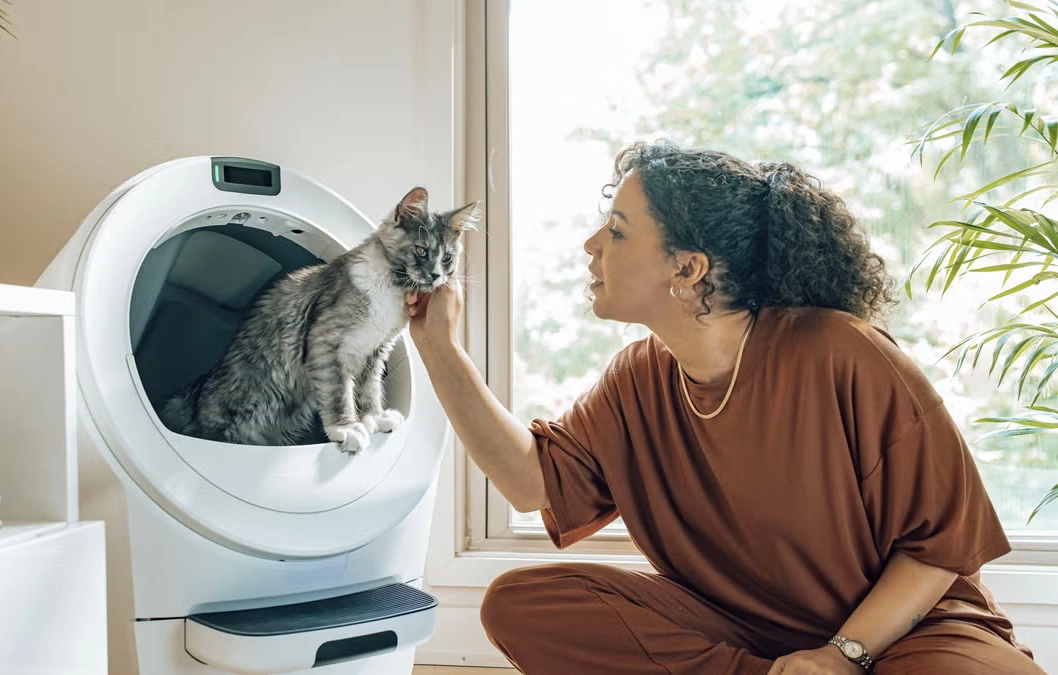
Here’s something most Litter-Robot 2 reviews bury at the bottom: you can’t buy one new anymore.
Whisker discontinued it once the Litter-Robot 3 and 4 landed. So if you’re researching the LR2 today, you’re looking at a Facebook Marketplace listing, a refurb, or a unit your sister-in-law is offloading because she upgraded. That changes the question completely. Forget “is this the best automatic litter box.” The real question is whether this particular used machine is worth what someone’s asking for it.
Usually? Yeah. The LR2 is a stubborn little tank and plenty of them are still running a decade in. But there are four things about it that will annoy you if nobody warns you first, and one of them is a hard dealbreaker for some cats.
How the thing actually works
The whole machine is built around one idea: instead of you sifting the litter, the box sifts itself.
Your cat goes in, does its business, walks out. Seven minutes later the globe starts rotating. As it turns, clean litter drops through a screen and stays in the globe. The clumps are too big to fit through, so they ride around and fall into a covered drawer at the bottom. Globe rotates back. Done.
That’s the entire trick. No app, no sensor mapping your cat’s weight over time, no notifications. A motor, a screen, and a timer.
The upside of that simplicity is there’s very little to break. The upside for your wallet is litter. Because it’s only pulling out actual clumps instead of you shoveling half a scoop of clean litter along with every clump, Whisker puts the savings at up to 50% compared to a manual box. Given how the sifting works, that’s believable.
Quirk #1: the seven minutes is not negotiable
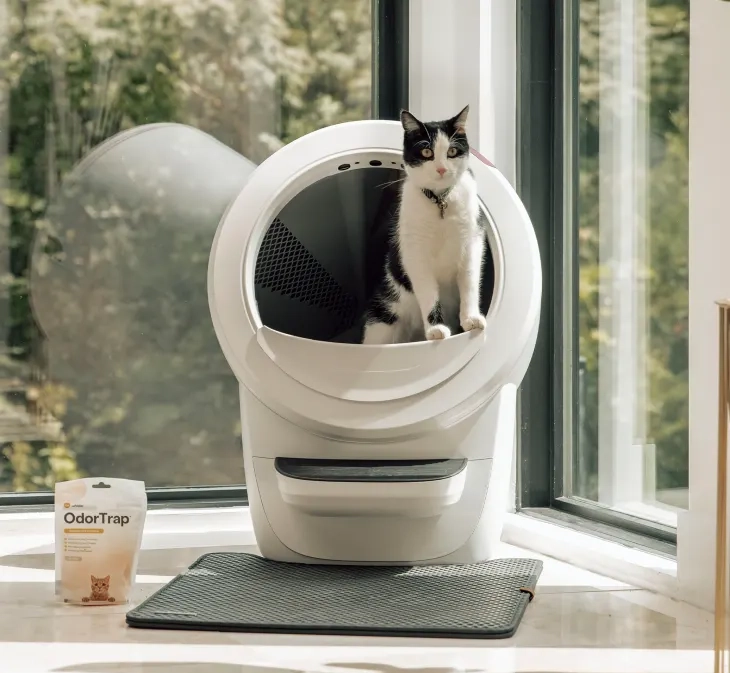
Every Litter-Robot waits before it cycles so it doesn’t start spinning while your cat is still inside. Sensible. But on the LR2 that delay is locked at seven minutes, and there is no way to change it.
The LR3 lets you choose 3, 5, or 7. The LR2 gives you seven. Take it or leave it.
In practice this matters less than it sounds, because seven minutes is a reasonable buffer anyway. But if you’ve got a cat who wanders back in two minutes later, or you want a faster turnaround before guests show up, you’re stuck with it.
Quirk #2: the sensor sits in the step, not the globe
On the LR2, the weight sensor is built into the entry step. Your cat steps on it going in, steps off coming out, and that’s what starts the countdown.
Later models moved the sensor into the globe itself, which reads more accurately. The step-based setup on the LR2 works fine, but it’s cruder, and it’s a big part of why the weight range is so tight.
Which brings us to the actual dealbreaker.
Quirk #3: your cat has to weigh between 5 and 12 pounds
This one isn’t a preference. It’s a spec.
The LR2 is rated for cats from 5 to 12 lbs. Under five pounds and the step sensor may not reliably register that a cat came in at all. Over twelve and you’re outside what the unit was built to handle.
And twelve pounds is not a big cat. Plenty of Maine Coons, plenty of well-fed tabbies, plenty of perfectly normal male cats sail past twelve pounds without being remotely overweight. If yours is on the larger side, the LR2 is simply the wrong machine. Look at the LR4 instead, which has a bigger globe and a wider range.
Household size matters too. One cat is ideal. Two is workable. Three cats in an LR2 means a full drawer every other day and a lot of grumbling from cat number three.
Quirk #4: the doorway is narrow
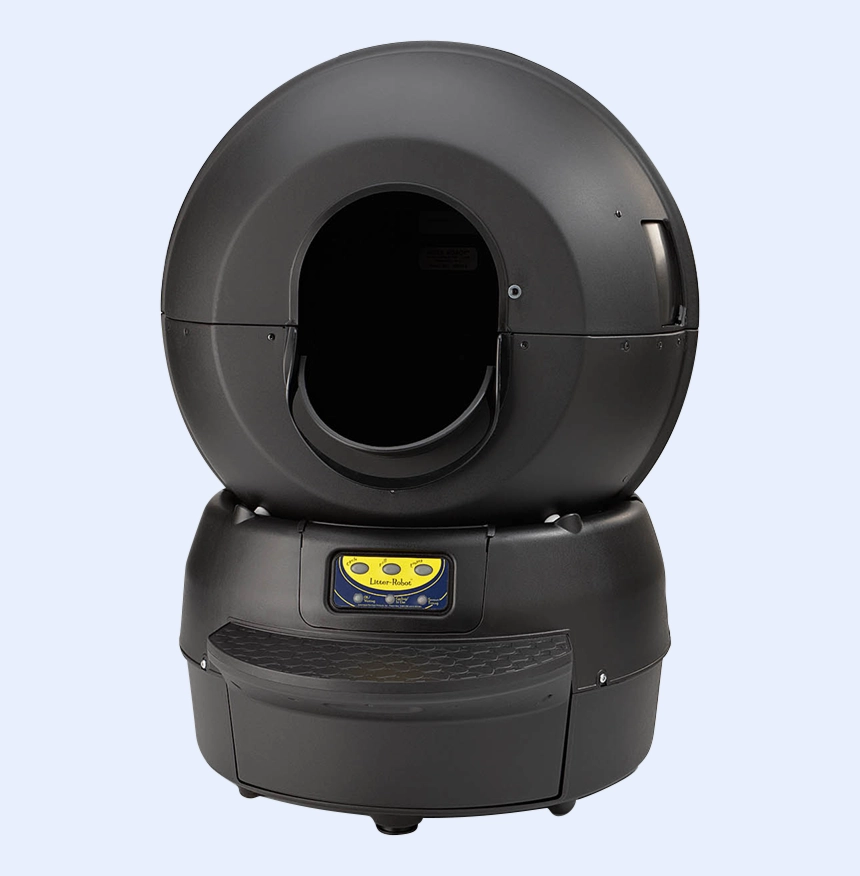
The entry is roughly 9 inches tall and 6.5 inches wide. Cats get through it without complaint. You won’t.
It’s too narrow to tip a jug of litter straight into the globe from the front. Most owners end up lifting the globe off or pouring at an awkward angle with a smaller scoop, which is a small irritation that repeats every couple of weeks for as long as you own it. The newer models widened this opening.
The drawer situation
Waste collects in a carbon-filtered drawer underneath. One cat, you’re emptying it every five to seven days. Two cats, closer to every three.
Here’s the part people forget. The LR2 will not run its cycle if the drawer is full. No alert, no phone notification, no warning light. It just quietly stops doing its job, and you find out a day and a half later when you notice the globe hasn’t turned. The LR3 added a full-drawer indicator specifically because of this.
Set a recurring reminder on your phone. Sounds silly. Solves the single most common LR2 complaint.
So should you buy a used one?
Depends entirely on the price and the cat.
Skip it if your cat is over 12 lbs, if you have three or more cats, or if the seller wants anything close to the price of a new LR3 or LR4. At that point just buy new and keep the warranty.
Consider it if you’ve got one or two smallish cats, the price is well under a new unit, and you can watch it run before money changes hands.
If you do go used, do these things:
- Plug it in and watch a full cycle start to finish before you pay
- Listen for grinding or a motor that struggles partway through the rotation
- Check the globe screen for cracks and the drawer for warping
- Ask how old it is and whether it’s ever been repaired
- Confirm the base and globe came from the same unit, because mixed parts across generations cause problems
One point in the LR2’s favour: Whisker has said it aims to keep servicing discontinued products for about ten years and stocks components for warranty claims. That’s better long-term support than most discontinued electronics ever get.
LR2 vs LR3 vs LR4, quickly
The core sifting mechanism is the same across all three. Whisker never reinvented it. They just kept improving everything built around it.
The LR3 added adjustable cycle timing, moved the sensor into the globe, made the unit and the entryway bigger, and threw in a full-drawer indicator, sleep mode, and a night light.
The LR4 keeps that same sifting process and layers app control on top, so you can check the drawer level and run a cycle from your phone. It also handles bigger cats.
If you’re spending real money, spend it on an LR4. If you’re spending a fraction of that on a working LR2 from Marketplace and you have a normal-sized cat, that’s a good deal and you shouldn’t overthink it.
FAQs
Can you still buy a Litter-Robot 2 new?
No. Whisker discontinued the Classic and Bubble versions after the LR3 and LR4 arrived. Used and refurbished only at this point.
What litter does it need?
Clumping litter. The entire sifting system depends on waste forming clumps too big to fall through the screen. Non-clumping litter defeats the mechanism completely.
How many cats can share one?
One comfortably. Two if you stay on top of the drawer. Three is pushing it well past what the unit was designed for.
Will it work for a kitten?
Not until they hit five pounds. Below that the step sensor may not register them at all. Keep a regular box going until they’re big enough.
Is it loud?
It’s a motor turning a plastic globe, so there’s a low grinding hum for the length of the cycle. Most people tune it out within a week. If it lives in a bedroom, you’ll notice it.
Verdict
The Litter-Robot 2 is a good machine that got replaced by better ones. That’s not an insult. The job it was built to do, it still does, and it does it with fewer parts to fail than anything Whisker has released since.
Buy one if you find it cheap, your cat is under twelve pounds, and you can watch it run before paying. Otherwise put the money toward an LR4 and skip the used-gear gamble entirely.